


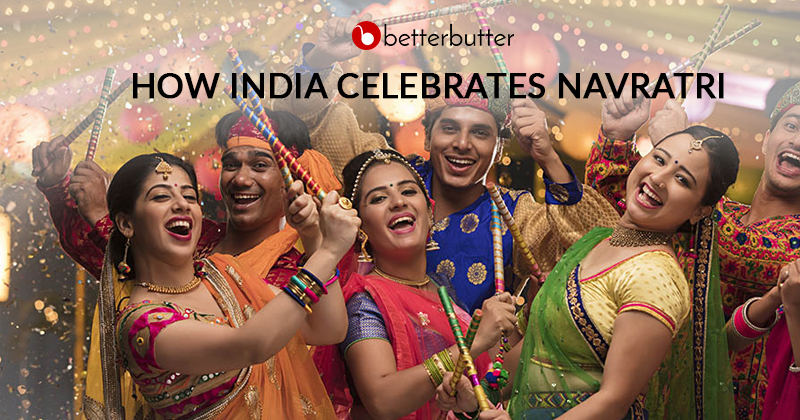
Festivals showcase the true spirit of Indian diversity on a massive scale. Our country celebrates festivities in unique ways that are painted in shades of regional cultures.
With the onset of autumn, families all around the country have been preparing for the grandest festival season.
The Nine days of Navratri celebrations are now on the go. Devotees across the country are gearing up to worship various reincarnations of Goddess Durga. Navratri brings a wave of carefully observed fasts and streams of beautiful colors amidst food, decorations, and clothes. These celebrations also accommodate traditions and values that are unique to various parts of India.
Here is a compilation of various ways in which India celebrates Navratri-
The Northern Part Of India–
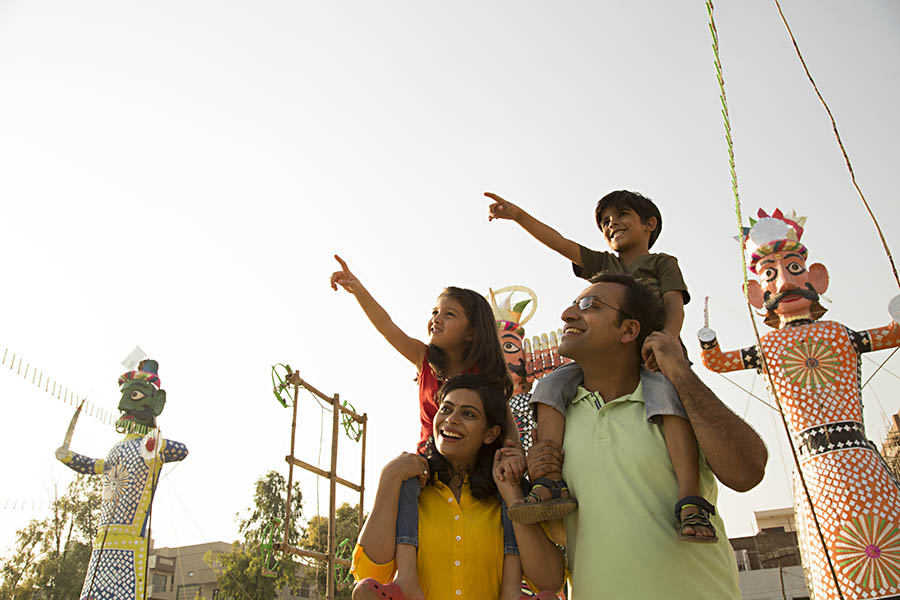
In the northern region of the country, the nine days of Navratri celebrate the victory of good over evil. Vijay Dashami commonly called Dussera is the last day of Navratri wherein devotees burn effigies of Ravana, Kumbhkarna, and Meghan. People celebrate lord Rama and his bravery across massive grounds. Ramlila is another famous tradition without which Navratri might be incomplete.
In north India, people conduct poojas , observe fasts and indulge into vrat special dishes like aloo halwa, sama rice dosa, rajgira paratha and kuttu poori. Devotees express love for the deity through zealous dances and singing. Further, it is common in this region to give customary gifts to dear ones.
Towards the South of India
Kolu is the main attraction of Navratri celebrations in southern India.
These are exhibitions of different dolls and figurines. Devotees prepare these exhibitions with great dedication and invite dear ones to visit their works. In Tamil, it is called Bommai Kolu, in Malayalam, it is Bomma Gully and in Telegu, these figurines are called Bommala Koluvu.
For South Indians, exhibitions of Kolus involve the highest enthusiasm as these traditions are friendly yet competitive.
People worship Goddesses Lakshmi, Durga, and Saraswati. Also, the exchange of coconut-based sweets and clothes are exchanged among friends and family.
The festival also invites a delectable platter of festive dishes like Kala Chana Sundal, Sweet Pongal, Poriarisi Urundai, and Sabudana Vada
The Eastern Corner Of India
In the far eastern part of the country, Navratri is famously celebrated as Durga Pooja. In Bengal, Pujo is celebrated in the last four days of Navratri. Both men and women adorn themselves in beautiful traditional jewelry and attires. Life sizes idols of Durga are established in massive pandals where the goddess is worshipped. Bengalis perform a “Maha Aarti” and sounds of Dhak and Dhunuchi Nach echo in Bengali hearts. On Dashami, people bid farewell to the goddess and pay their tributes with pomp and show.
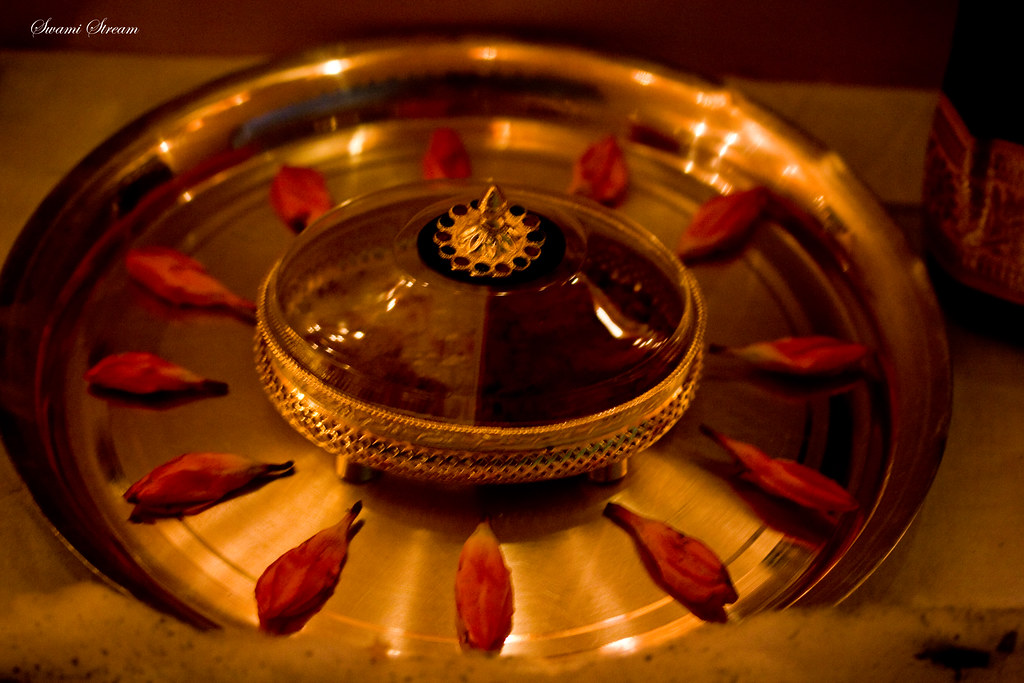
The Pujo Bhog is the essence of Durga Pooja which includes classic dishes like Moong Dal Khichdi, Labra, Tomato Chutney, Payesh, Beguni, Aloo Phulkopi and Rashogulla 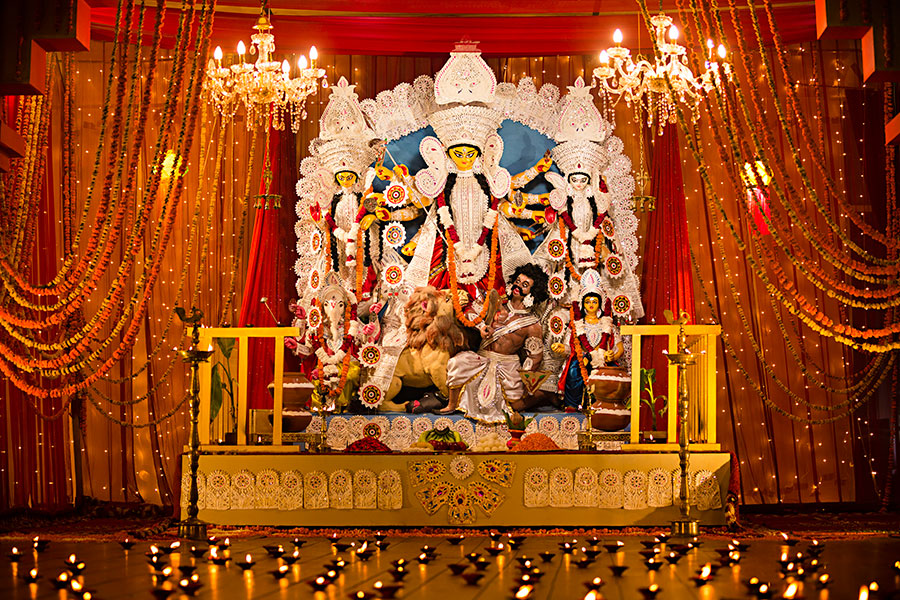
In the state of Chattisgarh,
The members of tribes in Bastar hold Navratri festivities for 75 days! They wind up on the thirteenth day of “Shukla Paksha” or waxing moon in the month of Ashwin. Also, they follow a ritual of Muria Durbar.
Around Parts of Western India
In the western state of Gujarat, Navratri is considered to be a very important festival. Devotees follow Navratri fasting on all nine days. People also worship the idols of goddesses. Moreover, as per a well-known ritual, Gujrati women light earthen pots at home and perform arti of goddess Durga. This pot is called “Garbi” and symbolizes power.
Navratri nights in the west are fueled with Garba Raas and dandiya Raas. Devotees gather and playfully enliven the spirits of Navratri through traditional Gujarati dances.
The grand celebration also includes indulgence in their authentic dishes like Handvo, Gujarati Kadhi, and Steamed Dhokla

These nine days prepare devotees for festivities of Dussehra and later Diwali.
The festival of Navratri is just the beginning of massive festivities and grand feasts that hit the subcontinent at this time of the year.